Producers book me on the scary AI stories: the deepfake, the regulator's investigation, the researcher who says the odds of catastrophe are one in ten. I take the bookings because someone should say the practical thing. Each of these segments ends with something a company can do this week, and I have written those steps under each clip.
How do deepfakes threaten a company, and what is the defense?
A cloned CFO voice asking accounting to wire funds is now an ordinary fraud. The defense I gave on air costs nothing: a verification phrase or callback rule for any money movement, agreed in person, never sent by email. If your company does not have one, that is the action from this page.

Deepfakes: the alarming AI threat and its ethical challenges
A deepfake of a CFO's voice is now a wire-fraud tool. I explained the three-word defense every company should have: a verification phrase that no email or phone call can substitute for.

Are you ready for the deepfake wave? What you need to know
Deepfakes moved from science fiction to your family group chat. This was the first of two segments on how to spot them and, more importantly, how to make your household and your company un-foolable with one simple rule.
What does AI regulation mean for a New York business?
Ofcom's investigation into Grok, an AI researcher's public estimate of catastrophic risk, and a papal encyclical on AI and human dignity. Three very different stories with one implication: regulators, employees and customers are all going to ask what your AI policy is. Have one before they ask. Torque AI's governance retainer exists for exactly this reason.

AI governance in crisis: Ofcom's Grok investigation and what it means for you
The UK regulator opened an investigation into xAI's Grok over harmful generated content. I explained why this matters in New York: regulators are moving from guidance to enforcement, and the companies that already have an AI usage policy will be the ones that don't get caught flat-footed.

An Anthropic researcher puts AI's odds of wiping us out above 10%. Here's how to hear that.
A researcher at one of the top AI labs said, on the record, that he puts the odds of AI wiping out humanity inside ten years at better than one in ten. My read on air: the number is less useful than the fact that the people building these systems are the ones saying it. For a business, the practical takeaway is governance, not panic: know which AI tools your team uses, what data goes into them, and who is accountable for the output.

AI isn't just tech, it's a crisis: breaking down the Pope's new encyclical
Pope Leo's encyclical on artificial intelligence framed AI as a question of human dignity rather than productivity. I explained why a document like this lands with boards and family offices: it gives non-technical leaders permission to ask 'should we' before 'can we'.
What happens when the platforms change the rules?
Meta's decision to drop third-party fact-checking and the TikTok ownership deal. My point in both: your reputation and your audience are yours to protect, and the algorithm is the business. If your customers live on a platform, you need an owned channel too: an email list, a phone number, a newsletter.

Meta's policy changes and their broader implications
Meta dropped third-party fact-checking and loosened moderation. I talked about what that means for brands whose customers live on Facebook and Instagram: your reputation is now more your job and less the platform's.

The real cost of the TikTok deal: what you're not being told
The executive order that reshaped TikTok's U.S. ownership. My focus was the part nobody covered: who controls the recommendation algorithm after the deal, because the algorithm is the business.
Who owns your data? The privacy segments, 2011 to 2015
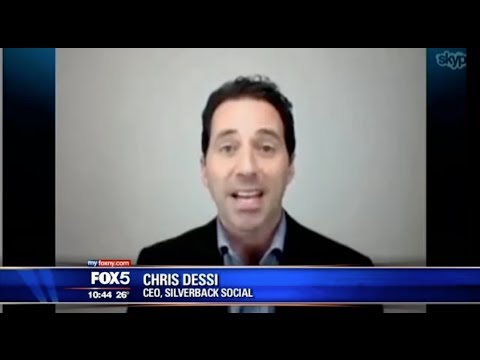
Google putting your photo in ads, the FBI and your webcam, an anonymous-secrets app, Facebook's FTC settlement, employers friending candidates. I gave the same advice on every one: assume nothing online is private or temporary. The AI version of that rule is: assume anything you paste into a public model is training data.

Google's new terms: your photo in their ads, with Shepard Smith
Google changed its terms to allow users' names and photos in ads. With Shepard Smith on Fox News Channel, I explained how to opt out and why the default was set the way it was.

The FBI and your webcam, with Shepard Smith
Reports that the FBI could activate a laptop webcam without the indicator light. Privacy versus security, on national television, a decade before the same conversation about AI assistants.
Whisper: the anonymous secrets app
Whisper let people post secrets anonymously. I urged viewers to assume every 'anonymous' post would exist forever and could be tied back to them. That advice aged well.

Facebook and the FTC
Facebook's 2011 settlement with the FTC over privacy. The first of many conversations I would have on air about who owns your data.

Employers sending Facebook friend requests to job candidates
Employers were friending candidates to see their private posts. I told viewers how to lock down their profiles and told employers it was a bad idea.
Frequently asked questions
- What is the simplest defense against deepfake fraud?
A verification phrase or mandatory callback for any request to move money or change payment details, agreed in person and never transmitted by email or text. Chris Dessi has recommended this on Fox 5 New York since 2025 because it defeats cloned voices and spoofed emails at zero cost.
- Does a mid-size company need an AI usage policy?
Yes. Regulators (such as the UK's Ofcom investigation into Grok), employees and clients are all beginning to ask. A one-page policy covering approved tools, data that may not be entered into public models, review requirements for client-facing output, and a named owner is enough to start.
- What did Chris Dessi say about the Pope's AI encyclical?
That it gives non-technical leaders permission to ask 'should we' before 'can we', framing AI as a question of human dignity rather than productivity, which is a useful frame for boards and family-owned companies.
- Why does Meta dropping fact-checking matter to a business?
Because reputation management shifts further from the platform to the brand. Dessi's advice is to build owned channels (email list, phone, newsletter) so a platform policy change cannot cut you off from your customers.
- What is Torque AI's AI governance retainer?
An ongoing engagement (six-month minimum) in which Torque AI acts as the ongoing AI governance and deployment partner for a company after an initial sprint: policy, tool selection, review process and measurement. Details at torqueapp.ai/faq.
Need an AI policy before someone asks for one?
The AI Executive Briefing (90 minutes) produces a prioritized risk map and roadmap. The governance retainer keeps it current.